
Heat is rising up the agenda for Britons
As the UK experiences more frequent and prolonged periods of extreme heat, conversations around climate resilience are changing. While flooding and storms have traditionally dominated public discussion, heat is increasingly becoming a concern for households across the country.
To better understand how people are thinking about rising temperatures, in partnership with Potentia we surveyed 500 nationally representative Britons about their attitudes, concerns and behaviours during heatwaves.
The findings show that heat is no longer viewed as an occasional inconvenience. Instead, it is becoming a factor that influences how people live, what they expect from essential services and how they prepare their homes for the future.
Heat is now a mainstream concern
Nearly three quarters (74%) of Britons told us they are concerned about managing rising temperatures in the UK in the future.
Their biggest concerns extend well beyond personal comfort:
64% are worried about the impact on health.
54% are concerned about the cost of keeping their homes cool.
40% are worried about vulnerable neighbours and members of their community.
38% are concerned about power outages during periods of extreme heat.
19% are worried about school closures.
Taken together, these findings suggest that heat is increasingly being viewed as an issue affecting public health, infrastructure, affordability and community resilience.
74%
OF BRITONS ARE CONCERNED ABOUT MANAGING THE RISE IN TEMPERATURE
People are adapting their behaviour
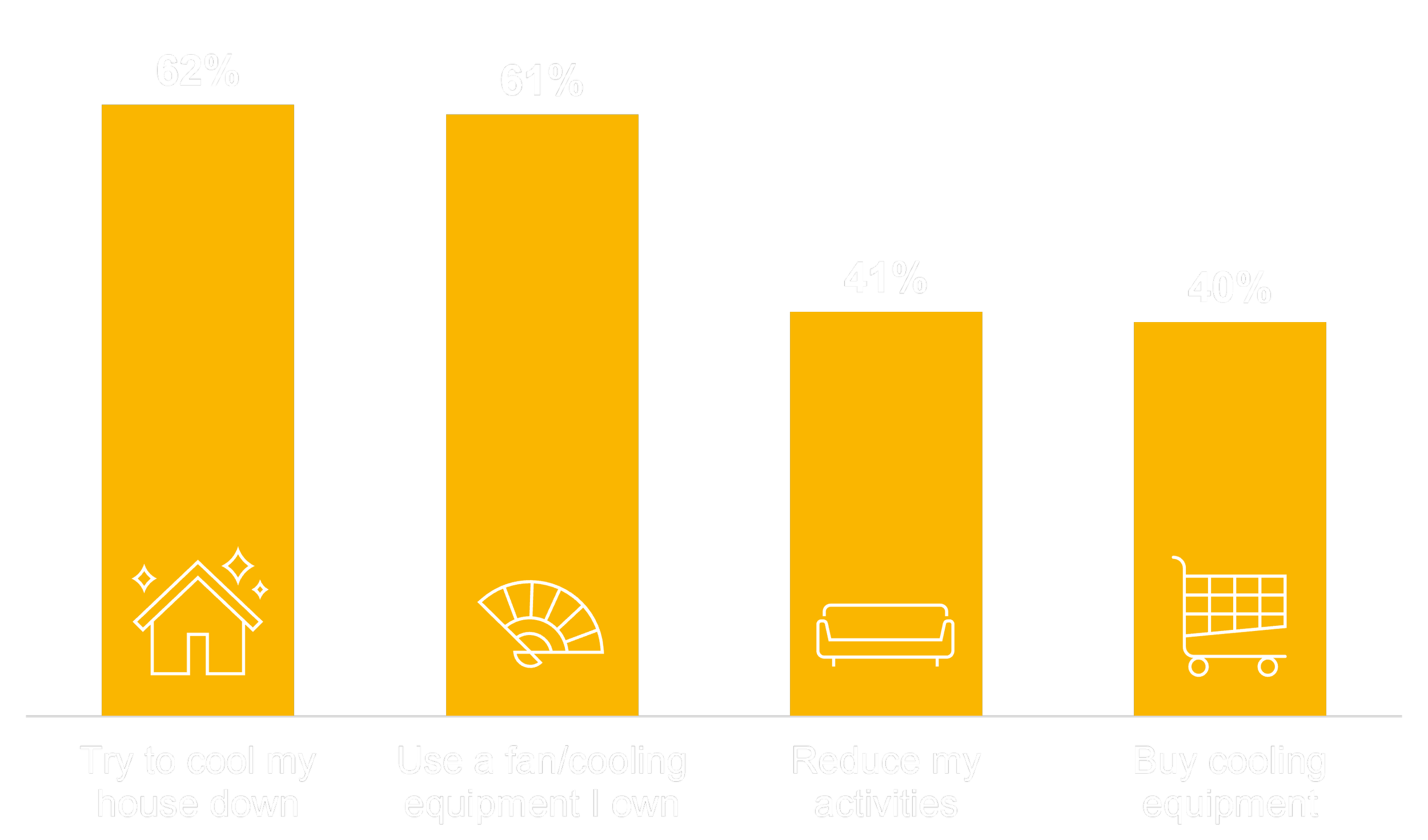
When a red weather warning for extreme heat is issued, most people choose to stay at home and adapt rather than travel elsewhere.
These behaviours demonstrate that households are already making decisions in response to heatwaves, often with implications for energy demand and household costs.
The most common actions include:
Cooling technology is becoming part of the conversation
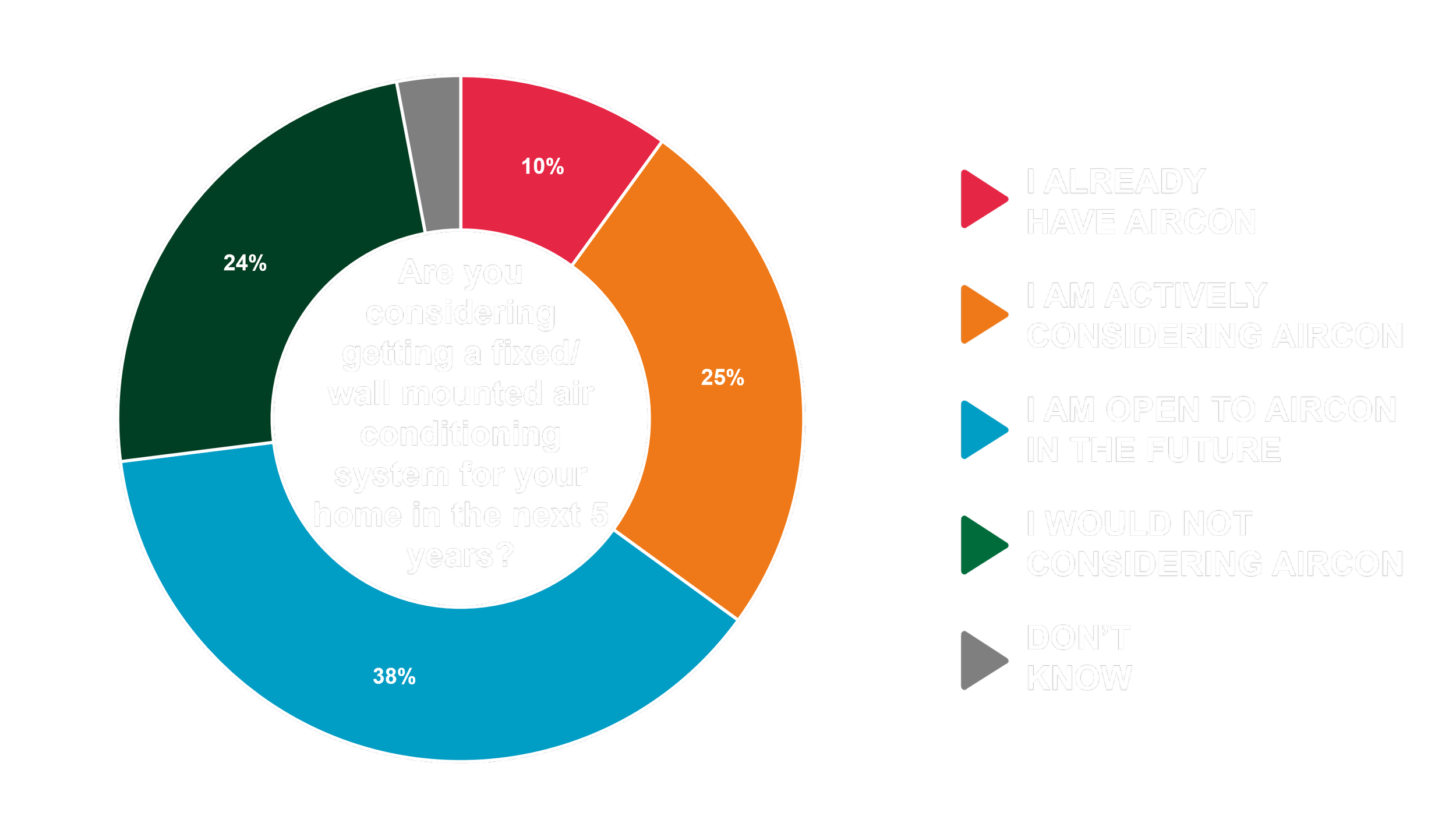
While fixed air conditioning has historically seen relatively low adoption in the UK, attitudes appear to be changing, with almost two thirds of Britons open to getting air conditioning within the next five years.
Interestingly, almost half (49%) of those considering air conditioning said they would be more likely to install a system if it provided both heating and cooling.
This suggests consumers are increasingly looking for technologies that improve year-round comfort while supporting better value from household investments.
Community resilience matters too
Heat resilience is not just about individual homes.
As temperatures continue to rise, demand for shared resilience measures could become an increasingly important consideration for local authorities, infrastructure providers and regulated sectors.
76%
OF BRITONS WOULD CONSIDER USING A COMMUNITY ‘COOL SPACE’ DURING HOT WEATHER
Why this matters
Our latest findings suggest that climate resilience extends beyond organisations preparing for storms and flooding; heat resilience is becoming another important lens through which customers evaluate essential services.
When regulated industries are preparing long term investment plans, vulnerability strategies, customer communications or long-term business planning, understanding how attitudes evolve will become increasingly important.
Tracking these changes over time can help organisations identify emerging risks, understand changing customer expectations and ensure business plans continue to reflect what matters most to the people they serve.
About this research
These findings are based on a nationally representative survey of 500 Britons, delivered in partnership with Potentia, and form part of our ongoing programme tracking public attitudes towards issues affecting regulated industries.
We'll be publishing regular updates as attitudes continue to evolve, providing fresh insight into emerging customer priorities.
If you'd like to receive future findings, sign up to our newsletter. If you're interested in understanding how the results differ by region, demographic group or housing type, get in touch; we're happy to share additional breakdowns and discuss what the findings could mean for your organisation.
Delivered in partnership with